
Quick! Think of a highly recognizable brand. What do you picture? Are you seeing a logo? Probably a distinct visual style? If so, that’s not unusual. Most of the world thinks of a brand in terms of images. But in the B2B marketing world, there’s much more to it. Unlike consumer brands, B2B brands have some added challenges, beginning with longer sales cycles, more complex buying decisions and, perhaps most daunting of all, multiple decision-makers influencing purchase.
In order to win over buyer confidence, these B2B conditions call for incredibly consistent brand messaging, a position that clearly differentiates the company and behaviors that back it all up. And none of that can happen without the consensus-building guidance of a brand platform.
What’s a Brand Platform?
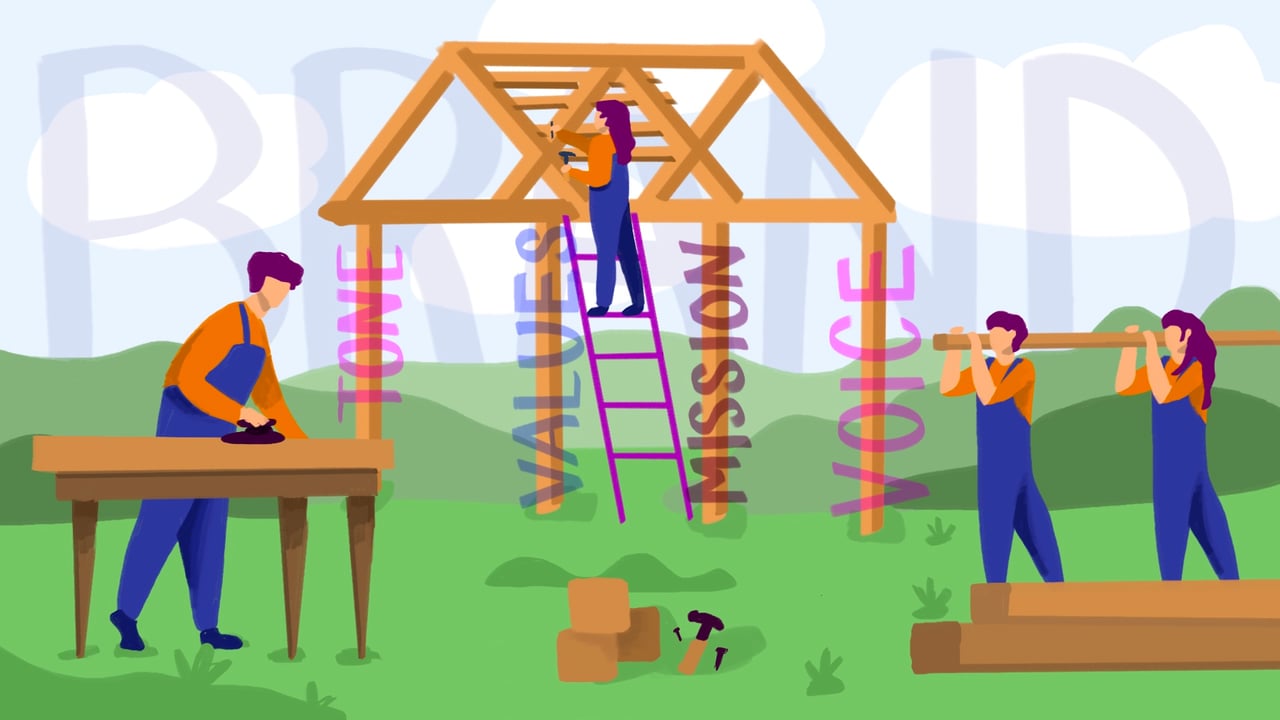
Much like the U.S. Constitution, a brand platform lays down the law on how an organization behaves, what it believes in and what it plans to accomplish in a way every employee needs to buy into—and follow through on—in order to build trust. From vision statement to value props, this essential document spells out what a company stands for, how it differs from competitors and what its customers can count on.
When is a good time to create a Brand Platform?
Brand platforms are typically timed with a major shift in an organization. That could be a merger or roll-up of acquired businesses, a change of leadership or a launch into a new vertical. But they can also arise when a brand becomes outdated and is in need of a refresh. Either way, getting everyone internally on the same page and rallying the troops are just as important as how the company plans to address its external audiences. Good B2B brand platforms cover both.
What’s included in a Brand Platform?
Let’s do a quick overview of each platform element, including how it’s defined, its function, and how to compose it.
Vision Statement:
This can go two ways: either what the company ultimately aims to achieve or what it aims to become. The former is more externally directed, the latter more internal. So, brand managers need to decide which to prioritize. The vision needs to be aspirational so employees have something meaningful to work towards. TIP: Steer clear of generic or unrealistic goals (i.e., to become the global leader in XYZ).
Mission Statement:
Too many B2B companies focus their mission statement on what they do. But that’s not why their people come to work every day. The mission should be focused on the “why” we come to work every day, also known as the company’s purpose. Effective mission statements say it all in ten words or fewer, so every associate can recite it by heart. TIP: Make sure your mission aligns with your vision, i.e., fulfilling your mission is what allows you to achieve your vision.
Core Values:
Think of your company Values as desired behaviors or actions needed to achieve your mission. Too often, Values become cliché, using general terms like teamwork, integrity, passion and excellence (aren’t these expected at every organization?) Values work better when they’re unique and ownable, and easy to follow (how exactly does one follow excellence?) Adcom’s core values include Curiosity, Grit, Positivity and Being Candid. TIP: Values offer a clear and simple way to evaluate employee performance and the cultural fit of job candidates.
Value Propositions/Brand Promise:
Value Propositions state what the company ultimately intends to deliver to its customers. Some brands have a single “Val Prop.” Others have several. These tend to be fairly literal. Similar, but slightly different, a Brand Promise is always a singular deliverable and often reaches beyond the physical qualities of the product or service, assuring customers of a more emotional gain.
Brand Voice/Personality:
Brand Voice is often interchangeable with Brand Personality, although there can be nuances to each. In terms of a Voice, think of the brand as a person. What qualities would you say describe the tone of the marketing messaging/content? Brand Personality may not be as specific to marketing copy and can extend to the ways your people interact with external audiences.
Positioning Statement:
A Positioning Statement specifies where the brand stands relative to the competition. That position can be vastly different from others, or similar to competitors', depending on whether the company aims to outmatch rivals at their own game. TIP: A common three-sentence template covers what you are, what you do/provide and what makes you different.
.png?width=1376&height=768&name=Untitled%20design%20(72).png)
Elevator Speech:
Somebody long ago decided that employees need to be equipped to tell their company’s story in an elevator by the time they reach the lobby. (In New York, that would be a lot longer than in Cleveland.) Think of this element as a short bio or the boilerplate copy at the end of a press release.
Brand Manifesto:
This is the prose that gets the troops to charge up the hill while bringing a tear to their eye. A Brand Manifesto is the most inspiring platform element and can even become poetic or lyrical. You’ll often see these translated into 90-second Super Bowl commercials. TIP: Tie your manifesto to your mission and/or vision. And then imagine it being read by a well-respected celebrity voice. Yes, like Morgan Freeman or Mila Kunis.
Brand Pillars:
As opposed to Values, which describe a behavior, Pillars are the three to five core concepts most essential to the company’s success. Examples include speed/responsiveness, versatility/nimbleness, innovation/forward thinking, etc. TIP: Add subtext/bullet points to help refine your pillar so it better applies to your specific business conditions.
Features/Benefits:
These describe what the company provides (features) and how those provisions translate into customer gains (benefits). Features and Benefits should align with one another; Feature A translates to Benefit A. TIP: Features and Benefits are where you can craft language to be used verbatim across multiple touch points to show consistency and authority over time.
Differentiators:
What separates a brand from others may be covered in Features/Benefits. But if there’s a need to overtly call out those offerings that distance the organization from competitors, they should be called out as differentiators.
Tag Line:
The line that rounds out marketing messages is also a great way to put a finishing touch on a brand platform. A tag line should translate the Brand Promise into a concise and catchy phrase. If you can make others sing it, even better!
Let’s Wrap It Up
The exercise of crafting a successful brand platform begins with knowing what the company expects from it and how it plans to use it. Is it to guide a small internal group of creatives or be evangelized throughout a multi-national enterprise? Is it intended to effect change or reinforce current goals and objectives? Is it a brand refresh or wholesale overhaul? Is it a loose guide or a highly prescriptive directive? Each of these questions helps to answer how your platform should be built.
In my years at Adcom, my takeaway is that no two platforms are ever structured the same way. And they rarely include every element listed above. But bottom line, brand platforms need to be user-friendly and relatable from boardroom to reception desk to have any chance of gaining buy-in and moving an organization forward.
NOTE: If you were looking for tips on logo usage, color palettes, imagery, type fonts and other visual elements, Adcom generally covers these in a separate document known as Design Guidelines.
To learn more about how a Brand Platform can help your company to guide people inside and strengthen trust in your brand outside, drop the Adcom branding team a note at https://engageadcom.com/contact
About the Author
Mike Derrick, Adcom Executive Vice President and Creative Director, has been a part of well over fifty brand platform exercises for clients of all sizes, newly launching and deeply entrenched, industry leaders and challengers, B2B and B2C, for-profit and non-profit, public and private sector, you name it.