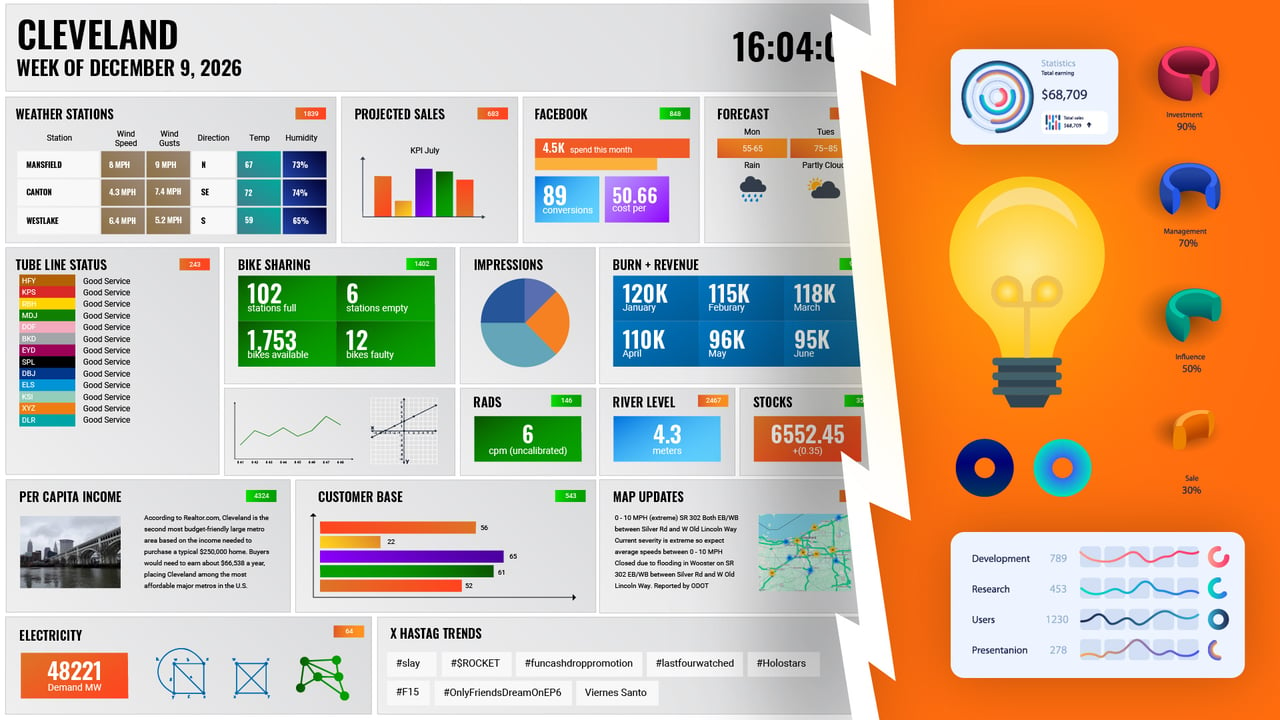

Let’s be honest, most dashboards look great at first glance. Clean layouts, colorful charts and real-time numbers give the impression that everything is under control. But that feeling doesn’t last long. After a few seconds, the question shifts from “this looks good” to something much more practical: what now?
That’s where things start to fall apart. A business dashboard is supposed to make decision-making easier, not create more hesitation. Yet many analytics dashboards stop at showing what happened without helping teams figure out what to do next. The data is there, but the direction isn’t. Over time, dashboards become something teams check out of routine rather than something they rely on to guide action. It’s not that the information is wrong. It’s just incomplete.
This shows up more often than you’d expect. Teams can have access to detailed reports and still find themselves pausing before making decisions. That’s exactly why there’s been a shift toward more practical, centralized client dashboards, platforms like Optiem Analytics, Adcom’s own Analytics platform. The goal isn’t just visibility. It’s usability.
What Happens When Dashboards Focus on “What Happened” Instead of “What To Do Next”?
Most dashboard reporting is built around past performance, which makes sense to a point. Metrics like clicks, impressions and conversions matter. But without context, they don’t really guide action.
So, teams compensate.
They dig into web analytics, compare time periods, question trends and try to build a story around the numbers. Sometimes that works. Other times, it leads to more uncertainty than clarity. A drop in performance might be seasonal, or it could signal something deeper. The problem is that the dashboard itself doesn’t help answer that.
That hesitation slows everything down. Campaign adjustments take longer, decisions become reactive and opportunities are easier to miss. In a space where timing matters, that gap between insight and action becomes a real disadvantage.
How Can Marketing Dashboards Be Designed to Drive Action?
The difference isn’t more data. It’s better context.
Strong dashboard design focuses less on volume and more on clarity. Instead of adding more charts, it highlights what actually matters and puts it into perspective. Trends show direction. Benchmarks show expectations. Outliers signal where attention is needed.
There’s also a structural shift that makes a big difference. Instead of organizing dashboards by platform, a better approach is to organize them around decisions. Not Google Ads here and social media there, but questions like: where should the budget increase, what needs fixing and what’s driving results?
That change sounds small, but it fundamentally shifts how the dashboard is used. It turns a static analytics template into something closer to a decision-making tool, similar to a well-built customer insight dashboard.
.png?width=1408&height=768&name=Untitled%20design%20(70).png)
What Role Does Technology Play in Creating Actionable Reporting?
At a certain point, this level of clarity can’t be handled manually. There’s just too much data moving too quickly.
That’s where modern reporting and analytics tools step in. Not just to visualize data, but to surface what matters within it. The best platforms don’t just display performance. They help interpret it.
This is where solutions like Optiem Analytics fit in naturally. Instead of switching between tools, everything sits within a single client dashboard. It’s accessible, streamlined and focused on what the user actually needs to see. More importantly, it connects metrics to meaning, which strengthens overall marketing analytics reporting and makes insights easier to act on.
What Does an Effective Marketing Analytics Dashboard Actually Look Like?
Interestingly, the most effective dashboards tend to show less, not more.
They focus on a smaller set of analytic metrics tied directly to business outcomes — things like cost per acquisition, conversion rate and return on ad spend. The goal isn’t to cover everything. It’s to make the right things obvious.
A strong data analytics reporting setup makes it easy to answer three simple questions: what’s working, what’s not and what needs attention right now. There’s no digging or second-guessing. The balance between insights vs. analytics becomes clear: data explains what happened, insights suggest what to do next.
Thinking About Improving Your Dashboard Strategy?
If your dashboards feel more like reports than decision-making tools, you’re not alone. Many teams already have the data they need. The challenge is making it usable.
At Adcom, the focus is on closing that gap and turning dashboards into something teams can actually act on. If you’re curious what that looks like in practice, you can explore it here.
About the Author:
Yukthi turns messy data into clean, compelling insights. As a Data Analyst at Adcom, she spends her days building dashboards, optimizing and automating data, and making sure nothing slips through the cracks. She’s also been part of the team behind Adcom’s Optiem Analytics platform and enjoys making Indian food where she’s traded dashboards for recipes but still appreciates a good process.