

What Makes Marketing to Multiple Manufacturing Audiences So Challenging?
Consider an industrial product or service. It must satisfy vastly different buyer types. A design engineer wants detailed technical specifications and compatibility data to ensure the product integrates seamlessly.
A procurement manager focuses on cost, bulk pricing, and supplier reliability. An installation contractor needs clear guides, the right tools, and time estimates. A facility manager focuses on maintenance schedules, energy efficiency, and total ownership costs.
Despite these varied needs, many manufacturers approach industrial marketing with one-size-fits-all messaging. Generic datasheets, universal landing pages, and broad email campaigns are supposed to “speak to everyone.”
The reality is far different. Engineers leave without the specs they need, procurement skips past unclear pricing information, and contractors struggle to find practical guidance. Your product may serve multiple audiences, but your marketing often serves none of them effectively. The result is lost leads, wasted marketing spend, and longer sales cycles.
Why Does Generic Content Kill Conversion?
Modern B2B buyers interact with an average of 13 pieces of content before making a purchase. Seventy-three percent of B2B purchases involve three or more people. Understanding their needs is important to generate leads.
Each buyer consumes content differently. Technical buyers, such as engineers and designers, seek deep dives into specifications, case studies, and white papers. Economic buyers, including procurement and finance teams, prioritize ROI, pricing transparency, and supplier reliability. End users, like contractors and facility teams, are looking for practical guides, training materials, and support resources.
When content is generic, it often misses the mark. Landing pages that try to serve everyone often have bounce rates over 70%.
When the message is unclear, potential customers go to competitors. These competitors offer the information that customers really need. Tailoring content to each audience is no longer optional. It is essential to shorten sales cycles, capture more qualified leads, and increase conversion.
How Can AI Personalization Solve the Problem?
AI personalization allows manufacturers to deliver the right content to the right audience at exactly the right time. AI looks at visitor behavior, referral sources, and firmographics. It finds out who engages with your content and what they want.
Engineers can immediately access technical specifications, while procurement sees detailed pricing and ROI calculations. Contractors receive installation guides and tool checklists, and facility managers are presented with maintenance schedules and efficient data.
AI also enables multi-variant content creation. A single datasheet can be transformed into four or more personalized versions, and landing pages can dynamically adjust headlines, imagery, and calls-to-action based on the visitor’s role and industry. Email campaigns can automatically segment content to match each audience, ensuring that messaging resonates and drives engagement.
Adcom combines AI technology with a strategic implementation process to ensure both scale and quality. The process begins with a content audit and persona refinement to define the unique needs of each target audience. Message architecture is developed to maintain consistency across roles, and AI is trained to uphold brand voice and technical accuracy. Quality control and approval workflows ensure all content is polished and aligned before reaching prospects.
What Results Can Manufacturers Expect?
Consider a case study of an industrial valve manufacturer that faced multiple buyer types and a limited marketing team. Their challenge was clear: making custom content for each audience took a lot of time. Misaligned messaging was also making the sales cycle longer.
Adcom implemented a multi-faceted AI personalization strategy. They developed five core buyer personas based on CRM data and sales team input. Dynamic content templates were created for key product categories, and AI-powered landing pages were launched to deliver role-specific content. Behavioral email sequences were set up to engage prospects with messaging tailored to their role and stage in the buyer journey.
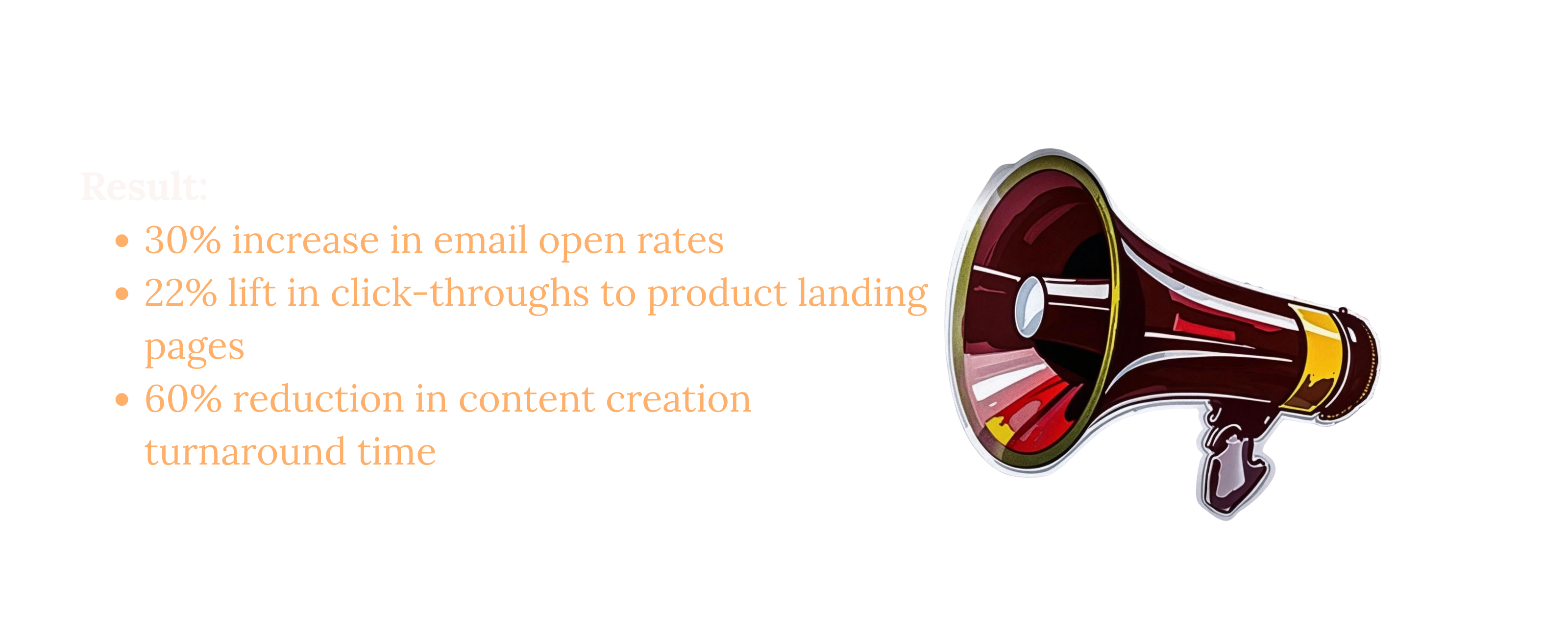
Over six months, the results were significant. Content engagement increased by 45%, and the time spent creating content decreased by 60%. Landing page conversions doubled, lead qualification accelerated by 35%, and marketing-attributed pipeline grew by $1.8 million. These metrics highlight the tangible impact of AI-driven personalization for manufacturers.
Which Content Benefits Most from Personalization?
Certain types of content see the greatest returns when personalized. Product datasheets, for instance, can be tailored so engineers focus on specifications and compatibility, procurement views pricing and ROI, and contractors receive installation instructions. Landing pages can change headlines, images, and social proof based on each visitor’s role. This makes the experience more relevant and engaging.
Email campaigns also benefit from AI personalization. You can improve subject lines, content order, and calls-to-action for different roles and industries. This will help increase open and click-through rates.
Case studies can emphasize technical innovation for engineers, ROI for procurement, and ease of implementation for end users. Industry-specific metrics and examples reinforce relevance for every audience.
By customizing these main content types, manufacturers can effectively reach all buyers. They do not need to create separate campaigns for each role.
How Can Manufacturers Start Without Overwhelming Their Team?
Starting small is key. Focus on your highest-traffic or highest-value content first, such as key landing pages or critical email campaigns. Use AI to enhance human creativity, not replace it entirely, and maintain brand consistency through clear guidelines. Measure engagement, conversions, and lead quality to iterate and optimize content over time.
By starting with manageable initiatives, manufacturers can gain measurable ROI from personalized marketing while keeping workloads reasonable. Once the team has some early successes, they can start to expand personalization. They can do this for more content types, buyer groups, and marketing channels.
.png?width=1648&height=584&name=Blog%20Fill%20Ins%20(5).png)
Ready for personalized manufacturing marketing? Read the full guide and schedule your Content Strategy Session!